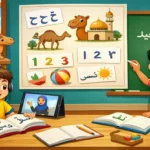





Arabic is one of the most widely spoken languages in the world, serving as the primary mode of communication across the Middle East and North Africa. For many, it is not only a linguistic pursuit but also a cultural and spiritual endeavor. As globalization connects individuals from diverse backgrounds, the importance of learning Arabic has become increasingly evident for expatriates navigating life in Arabic-speaking countries, professionals seeking regional opportunities, and parents aiming to cultivate bilingual or religiously literate households.
Despite its perceived difficulty, Arabic is a deeply rewarding language to learn. Its structure, logic, and historical richness offer profound insights into Arab civilizations and Islamic scholarship. For those wishing to understand the Holy Quran, acquiring proficiency in Arabic is indispensable. Fortunately, with modern resources such as Arabic Guru Academy, learners can now learn Arabic online in a structured and meaningful way, regardless of their background or goals.
This guide aims to demystify the process of learning Arabic from scratch, offering practical steps, addressing common challenges, and recommending targeted resources to support lifelong linguistic growth.
Arabic is the fifth most spoken language globally, with over 400 million speakers across more than 25 countries. It is also one of the six official languages of the United Nations. For expatriates residing in the Arab world, fluency in Arabic can significantly enhance integration, social interaction, and cultural appreciation. It enables meaningful engagement with local communities, smooths daily transactions, and fosters a sense of belonging.
From a professional standpoint, Arabic has become an increasingly valuable asset. Industries such as energy, finance, international law, journalism, and diplomacy frequently seek individuals who can navigate both linguistic and cultural nuances. Employers often prioritize candidates who possess language proficiency, particularly when roles involve working in or with the Arab region.
Perhaps the most profound motivation for many learners—especially Muslims—is the desire to understand the Holy Quran in its original language. Unlike translated texts, the Quran in Arabic preserves its poetic structure, linguistic beauty, and theological depth. Learning Classical or Modern Standard Arabic (MSA) allows readers to engage directly with the Quranic message, enhancing comprehension and spiritual connection.
Institutions such as Arabic Guru Academy offer specialized courses designed specifically for this purpose. The course “Understanding the Meaning of the Holy Quran” provides a structured pathway for learners seeking religious insight through language acquisition.
Beyond religious and practical motivations, learning Arabic fosters cognitive development. Studies show that bilingualism enhances memory, problem-solving skills, and multitasking ability. For parents, introducing Arabic to children at an early age can provide lasting educational and neurological advantages. Additionally, it encourages a broader worldview and respect for cultural diversity.
Learning Arabic can seem intimidating to many, especially those whose native languages are Latin- or Germanic-based. The script, phonology, and grammatical structure differ significantly from English, which can create an initial barrier. However, with patience and a strategic approach, these challenges can be overcome.
Arabic uses a unique script written from right to left, which includes 28 letters. While this may appear complex at first glance, learners often find the alphabet surprisingly consistent once the foundational letters are mastered. However, Arabic also contains several sounds that do not exist in English, such as the emphatic consonants (ص, ط, ظ) and the guttural ‘ayn (ع), which require focused practice to articulate correctly.
A notable feature of Arabic is its diglossic nature. Modern Standard Arabic (MSA) is used in formal writing, media, and religious contexts, while regional dialects vary significantly in vocabulary, pronunciation, and even grammar. This dual system can initially confuse learners who are unsure whether to focus on MSA or a local dialect. For those aiming to understand the Holy Quran, MSA or Classical Arabic is essential. For daily communication, especially for expats, learning a specific dialect—such as Egyptian or Levantine Arabic—may be more immediately practical.
Arabic grammar is highly structured and logical but differs greatly from English.
Noun-adjective agreements, verb conjugations across multiple pronouns and tenses, and the case system (nominative, accusative, genitive) can seem overwhelming. However, consistent exposure and guided instruction can make these elements manageable, especially when broken down systematically as in the courses offered by Arabic Guru Academy.
Before diving into the language, clarify your purpose. Are you learning Arabic for religious reasons, professional development, travel, or to support your children’s education? Defining your goal will help you choose the appropriate register (e.g., MSA, Classical Arabic, or dialect) and resources.
Mastering the Arabic alphabet is foundational. Start by learning each letter’s isolated and contextual forms (initial, medial, final), followed by short vowels (harakat) and diacritics. Resources like Arabic Guru Academy’s beginner modules offer interactive exercises for reading and writing practice. Audio tools are also essential to help you distinguish subtle phonetic differences.
Focus on practical themes such as greetings, family, food, and daily routines. Using flashcards, spaced repetition apps like Anki, or vocabulary sections from structured programs accelerates retention. Incorporate new words into spoken and written practice as soon as possible to reinforce learning.
Begin with basic grammar: pronouns, singular/plural forms, simple verb conjugations (past and present), and nominal sentences. Gradually progress to more complex structures such as relative clauses and prepositional phrases. Arabic Guru Academy offers a tiered grammar system that introduces new rules in an accessible, student-friendly manner.
Listening to Arabic podcasts, Quran recitations, and news broadcasts in MSA develops auditory comprehension. Repeat what you hear to improve pronunciation. For speaking, consider language exchange platforms or structured conversation classes, particularly those that integrate MSA for formal expression.
Reading children’s books, Quranic verses, or beginner texts reinforces script recognition and vocabulary. Writing short journal entries, translation exercises, or verse reflections helps solidify grammar and syntax. Use tools like LangCorrect or tutor feedback for corrections.
Finally, consistency and accountability are key. Enrolling in a guided online course provides structure, expert support, and community motivation. Arabic Guru Academy offers a comprehensive curriculum, including the flagship course “Understanding the Meaning of the Holy Quran”, ideal for those who wish to connect with the Quran linguistically and spiritually. These courses combine grammar instruction, Quranic vocabulary, tafsir, and pronunciation exercises, providing a holistic approach to Arabic mastery.
In the vast landscape of Arabic learning platforms, Arabic Guru Academy distinguishes itself through its clear focus on Quranic comprehension and learner-centered methodology. Whether you are a beginner seeking foundational skills or an intermediate learner aiming to deepen your religious understanding, the Academy offers structured, comprehensive, and spiritually enriching courses tailored to various goals.
One of the Academy’s most acclaimed programs is the course “Understanding the Meaning of the Holy Quran.” This course is specifically designed for learners who aspire to grasp the Quran in its original language without relying solely on translations. By combining Arabic grammar, root-word analysis, tafsir (interpretation), and contextual learning, the course equips students with tools to unlock the deeper meanings of the Quranic text.
Key features include:
Students not only improve their Arabic proficiency but also cultivate a more intimate and reflective relationship with the Holy Quran. This unique integration of language learning and spiritual growth makes Arabic Guru Academy a leading choice for serious learners.
While the fundamentals of Arabic learning apply broadly, each learner group has specific contexts and needs. Here are practical recommendations tailored to expatriates, professionals, and parents.
Expats living in Arabic-speaking countries benefit immensely from focusing on communicative competence. Begin with essential survival phrases and daily vocabulary used in markets, hospitals, and public offices. Consider learning the local dialect for smoother interaction. Pair this with foundational Modern Standard Arabic to access signage, media, and formal documents. Arabic Guru Academy’s flexible course schedule allows learners to integrate study into busy relocation routines.
Professionals should prioritize sector-specific vocabulary and formal Arabic usage (MSA).
Whether you work in healthcare, business, education, or diplomacy, a working knowledge of Arabic enhances credibility and negotiation ability. Invest in language tools that offer technical terminology and role-based dialogue. Regularly reading Arabic news and attending webinars in Arabic can also be beneficial. Courses from Arabic Guru Academy offer grammar and reading comprehension modules relevant to professional communication.
Parents seeking to raise bilingual children or instill Quranic literacy should begin early with consistent exposure. Use Arabic in the home through stories, songs, and daily phrases. Enroll children in Arabic immersion programs or weekend Quranic classes. Simultaneously, parents can study with Arabic Guru Academy to model learning and better support their children’s education. The Academy’s curriculum is parent-friendly, enabling adults to learn at their own pace while transferring knowledge to the next generation.
Learning Arabic from scratch is a meaningful and transformative journey—one that opens doors to new cultures, spiritual insights, and personal growth. For expats, it enhances integration and respect within the communities they inhabit. For professionals, it adds a strategic edge in increasingly competitive global industries. For parents, it fosters intergenerational understanding and builds a foundation for children’s educational and religious development.
While Arabic may initially seem daunting due to its unique script, pronunciation, and grammatical complexity, these challenges are not insurmountable. With clear goals, structured guidance, and the right resources, learners can progress steadily and confidently. Modern platforms now allow anyone to learn Arabic online—efficiently and meaningfully.
Among these, Arabic Guru Academy stands out for its commitment to accessible, spiritually aligned language instruction. Their flagship course, “Understanding the Meaning of the Holy Quran,” empowers students not only to read the Quran, but to truly understand and reflect upon its divine message in its original language.
In summary, success in learning Arabic lies in consistency, purposeful study, and connection with high-quality resources. Whether you’re a newcomer or a seasoned learner, now is the ideal time to embark on this journey—and Arabic Guru Academy offers the path forward.