Modern Standard Arabic vs Dialects: What Should You Learn First?
Introduction
Arabic is one of the world’s most influential and widely spoken languages, with over 300 million native speakers across more than 20 countries. It is the language of the Quran, the medium of a rich literary tradition, and the key to understanding diverse Arab cultures. In recent years, Arabic has attracted growing interest from students, professionals, and spiritual seekers alike.
However, many beginners face an important question before they even start: Should I learn Modern Standard Arabic (MSA) or a regional dialect first? This decision can shape the direction, style, and practicality of your learning journey.
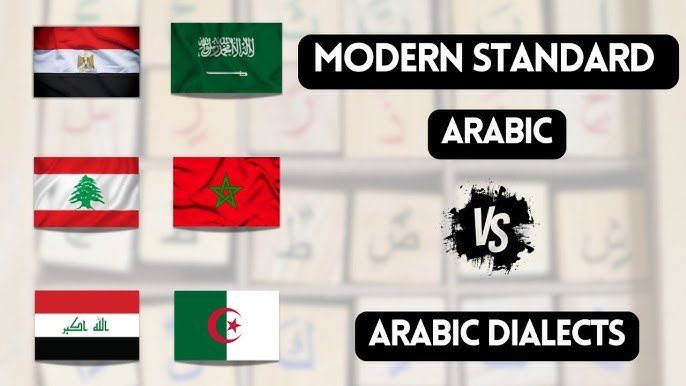
Modern Standard Arabic—the formal, pan-Arabic variety—is taught in schools, used in the media, and understood across the Arab world. Dialects, on the other hand, are the everyday spoken forms of Arabic, varying significantly from one region to another. While MSA offers universal comprehension and formal correctness, dialects provide immediate conversational utility and cultural immersion.
In this article, we will examine the differences between MSA and Arabic dialects, explore their respective strengths and limitations, and offer guidance on which path to begin with based on your personal goals. Whether you aim to learn Arabic online, study the Quran, or connect with a particular Arab community, making the right choice early on will save time, frustration, and confusion later.
Understanding Modern Standard Arabic (MSA)
Modern Standard Arabic (MSA), known in Arabic as al-ʿArabiyyah al-Fuṣḥā, is the formal, standardized version of the language used across the Arab world. It is directly derived from Classical Arabic—the language of the Quran—but simplified in certain grammatical structures and adapted for contemporary use.
Where MSA Is Used
- Education: MSA is the language of instruction in schools and universities across the Arab world, especially for literature, history, and religion.
- Media: News broadcasts, documentaries, official announcements, and pan-Arab publications use MSA to ensure they can be understood in every country.
- Formal Settings: Speeches, conferences, political addresses, and legal documents are typically delivered in MSA.
- Literature and Religious Texts: While Classical Arabic dominates sacred scripture, modern books and academic works are often in MSA.
Advantages of Learning MSA
- Universal Understanding: While dialects vary significantly, MSA is recognized and understood across all Arab countries.
- Gateway to Classical Arabic: Since MSA is based on Classical Arabic, it provides an excellent foundation for understanding the Quran, Hadith, and classical literature.
- Academic and Professional Utility: Many careers in diplomacy, translation, journalism, and academia require proficiency in MSA.
- Clear and Structured Grammar: MSA’s grammatical rules are standardized, making it easier to learn systematically compared to the organic, variable nature of dialects.
Limitations of MSA
- Not Used in Daily Conversations: Native speakers rarely use MSA in casual, everyday speech.
- Formality Barrier: Speaking MSA in informal contexts can sound overly formal or even humorous to native speakers.
- Slower Path to Conversational Fluency: If your primary goal is to chat comfortably with locals, MSA alone won’t get you there quickly—you will need at least some knowledge of the relevant dialect.
In short, MSA is the linguistic backbone of the Arabic-speaking world: indispensable for reading, writing, formal communication, and religious studies, but less practical for casual conversation without supplementing it with a dialect.
Understanding Arabic Dialects
Arabic dialects, collectively known as ʿĀmmiyyah or Darījah depending on the region, are the spoken varieties of Arabic used in everyday life. Unlike Modern Standard Arabic (MSA), which is standardized across the Arab world, dialects vary significantly from one country—or even one city—to another. These dialects developed organically over centuries, shaped by geography, history, and contact with other languages.
Where Dialects Are Used
- Daily Conversation: Family discussions, casual chats, and marketplace interactions.
- Entertainment: Movies, music, soap operas, and comedy shows are typically in dialect.
- Local Media: Many television and radio programs use the local dialect to connect more naturally with audiences.
- Social Media: Informal posts, memes, and online conversations often use dialect spelling and vocabulary.
Examples of Major Dialects
- Egyptian Arabic (Masri): Widely understood due to Egypt’s film and TV dominance.
- Levantine Arabic (Shami): Spoken in Syria, Lebanon, Jordan, and Palestine; popular in music and TV dramas.
- Gulf Arabic (Khaleeji): Spoken in Saudi Arabia, Kuwait, Bahrain, Qatar, UAE, and parts of Oman.
- Maghrebi Arabic (Darija): Spoken in Morocco, Algeria, Tunisia, Libya; heavily influenced by Berber, French, and Spanish.
- Sudanese Arabic: A distinct variety influenced by African languages.
Advantages of Learning a Dialect
- Immediate Conversational Ability: If you’re living in or traveling to a specific country, the local dialect lets you connect instantly.
- Cultural Immersion: Understanding dialect opens the door to jokes, expressions, and cultural references that don’t translate well into MSA.
- Social Integration: Locals often respond more warmly when foreigners speak in their native dialect.
Limitations of Learning a Dialect
- Region-Specific: A dialect learned in one country may be difficult to use elsewhere. For example, Moroccan Darija is often unintelligible to Egyptians.
- No Standardized Grammar: Dialects evolve naturally, so they lack the uniformity of MSA.
- Limited Use in Writing: Dialects are rarely used in formal documents, academic writing, or official speeches.
In short, learning a dialect equips you for real-life, on-the-ground interaction, but offers limited access to formal texts, religious literature, or pan-Arab communication without MSA.
Key Differences Between MSA and Dialects
Modern Standard Arabic (MSA) and Arabic dialects share a common root in Classical Arabic, but over time, they have diverged in vocabulary, grammar, pronunciation, and usage. Understanding these differences helps learners choose the right starting point and avoid mixing the two prematurely.
a. Grammar
- MSA: Retains much of the structure of Classical Arabic, including full case endings (i‘rāb), formal verb conjugations, and precise sentence order. Example: the nominative (-u), accusative (-a), and genitive (-i) endings are pronounced in formal speech.
- Dialects: Often drop case endings entirely and simplify grammar for ease of speech. For example, Egyptian Arabic uses shorter verb forms and more flexible word order.
b. Vocabulary
- MSA: Uses standardized terms, often of Classical Arabic origin. Example: sayyārah (car).
- Dialects: Use colloquial words, sometimes borrowed from other languages. Example: in Egyptian Arabic, ʿarabiyyah is used for “car”; in Moroccan Darija, tomobil (from French automobile) is common.
c. Pronunciation
- MSA: Pronunciation follows standardized phonetic rules, though influenced slightly by regional accent.
- Dialects: Pronunciation can vary greatly. For example, the letter ج is pronounced as “g” in Egypt (gamal for “camel”) but as “j” in most Levantine dialects.
d. Formality vs. Informality
- MSA: Reserved for formal communication—official speeches, academic writing, news broadcasts, and religious discourse.
- Dialects: Used for everyday interactions, storytelling, humor, and casual media.
e. Social Perception
- Speaking MSA in informal settings may sound overly formal or “bookish” to native speakers.
- Using dialect in a formal speech or academic setting may come across as inappropriate or unprofessional.
Example Comparison
| English |
MSA |
Egyptian Arabic |
Levantine Arabic |
| How are you? |
Kayfa ḥāluka? |
ʿIzayyak? |
Kīfak? |
| I want to eat. |
Urīdu an ākula. |
ʿAyiz ākul. |
Biddī ākul. |
| Thank you. |
Shukran. |
Shukran. (same) |
Shukran. (same) |
While the meaning is similar, the form, pronunciation, and word choice differ notably, affecting how natural the speech sounds to locals.
Which Should You Learn First?
Choosing between Modern Standard Arabic (MSA) and a dialect depends on your goals, environment, and priorities. There is no single “right” choice for everyone, but understanding the trade-offs can help you make an informed decision.
a. Learn MSA First If…
- Your goal is Quranic or Classical Arabic comprehension.MSA provides a direct pathway to reading the Quran, Hadith, and Islamic scholarship, as it is structurally close to Classical Arabic.
- You want pan-Arab communication in formal contexts.MSA is understood by educated speakers across the Arab world.
- You aim for academic, diplomatic, or media-related work.These fields often require a solid command of MSA before considering dialect.
- You value a strong grammatical foundation.MSA gives you the rules that make learning dialects easier later.
b. Learn a Dialect First If…
- You need conversational fluency quickly.If you’re moving to Egypt, for example, Egyptian Arabic will let you communicate effectively from day one.
- You plan to integrate deeply into one community.Learning the local dialect fosters closer cultural and social connections.
- You are learning for travel or social relationships.A dialect lets you engage with humor, music, and everyday life in a specific region.
c. Combining Approaches
Many experts recommend a blended approach:
- Start with MSA to understand structure, formal grammar, and standardized vocabulary.
- Add a dialect once you have basic MSA skills, so you can adapt to real-life communication.
This approach not only preserves the ability to understand formal Arabic but also allows for natural social interaction.
d. Common Mistakes to Avoid
- Mixing rules too early. Beginners often confuse MSA grammar with dialect patterns, creating a “hybrid” form that sounds unnatural in both contexts.
- Choosing based on popularity rather than goals. Egyptian Arabic might be widely understood, but it won’t be useful if your life or work is based in Morocco.
- Neglecting pronunciation differences. Correct sounds in MSA don’t always match their dialect counterparts.
Ultimately, your first choice should match your primary motivation. If your focus is religion, academia, or pan-Arab communication, MSA is best. If you need social and practical fluency in one place, start with the local dialect.
Resources for Learning Arabic
Your choice between Modern Standard Arabic (MSA) and a dialect is only part of the equation—success also depends on using the right learning resources. In today’s digital world, Arabic learners have unprecedented access to quality instruction, but not all programs are equally structured or goal-focused.
a. Arabic Guru Academy – A Complete Solution
For learners who want a clear, guided path from beginner to advanced, Arabic Guru Academy offers one of the most comprehensive Arabic programs available online.
- For MSA and Quranic Arabic: Courses are designed to build grammar, vocabulary, and comprehension step-by-step, making it easier to progress without gaps.
- For Dialects: Specialized modules cover Egyptian, Levantine, and Gulf Arabic for conversational fluency.
- Interactive Learning: Live classes, recorded lessons, and practical exercises keep students engaged.
- Cultural Context: Lessons include cultural notes, idioms, and real-life examples so students can communicate naturally.
Unlike many self-study resources, Arabic Guru Academy combines academic depth with practical usability, ensuring you can read a news article in MSA and also hold a casual conversation in a dialect.
b. Other Notable Resources
While Arabic Guru Academy can serve as your main learning platform, you can supplement it with:
- Bayyinah Institute – Ideal for Quranic Arabic learners.
- Madinah Arabic – Free grammar-focused materials.
- Talk in Arabic – Audio lessons in various dialects.
- italki / Preply – Hire native tutors for speaking practice.
c. Free Supplemental Tools
- YouTube Channels: “Learn Arabic with Maha,” “ArabicPod101,” and others for casual listening.
- Apps: Anki for vocabulary flashcards, Quranic for religious terms, and Drops for visual learners.
If you are serious about mastering Arabic—whether for religious study, academic goals, or real-life communication—starting with Arabic Guru Academy can give you both structure and flexibility, guiding you confidently from your first word to full comprehension.
Conclusion
Learning Arabic is a journey that opens doors to new cultures, deeper religious understanding, and richer human connections. But before you start, you must decide: Modern Standard Arabic or a dialect?
If your priority is academic study, Quranic understanding, or pan-Arab communication, Modern Standard Arabic should be your starting point. If your focus is immediate conversation, cultural immersion, or integration into a specific community, a dialect may serve you better. In many cases, the most effective approach is a combination—building a foundation in MSA and then branching into a dialect relevant to your goals.
Whichever path you choose, your success will depend on consistent, well-guided learning. This is where Arabic Guru Academy excels, offering structured, goal-oriented programs for both MSA and dialects, supported by expert instructors and interactive learning tools. With the right guidance, you can confidently navigate the formal elegance of MSA and the vibrant expressions of everyday dialects.
The Arabic-speaking world is vast and diverse, but with dedication and the right resources, you can find your voice within it. Your first step is choosing your path—your next step is committing to it.