




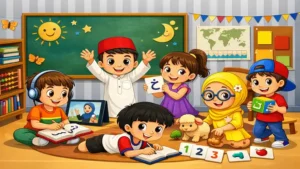
Teaching Arabic to children aged 5–10 who are non-native learners requires a very different approach than teaching adults or native speakers. At this age, children are cognitively ready to absorb...
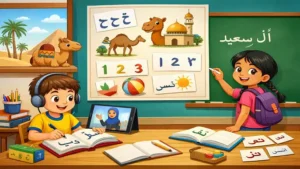
For Indian families living in the Middle East, Arabic is not just another language—it is a mandatory academic subject and an essential part of daily life. According to education data...

In the Middle East, Arabic is not only the language of culture and society but also a compulsory academic subject across most school systems. Whether a student is enrolled in...
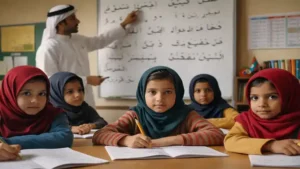
Across the Gulf region—including the UAE, Saudi Arabia, Qatar, Kuwait, Bahrain, and Oman—Arabic holds a central position in education, culture, and daily life. While these countries host highly diverse expatriate...

For thousands of Indian families living in the United Arab Emirates, the CBSE (Central Board of Secondary Education) curriculum offers academic continuity and familiarity. However, alongside core subjects like English,...
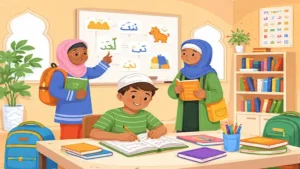
In the Gulf countries—such as the United Arab Emirates, Saudi Arabia, Qatar, Kuwait, Bahrain, and Oman—Arabic is more than just a subject taught in schools. It is the language of...
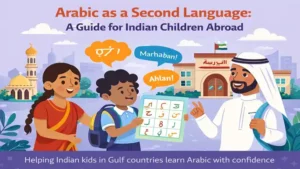
For many Indian families living abroad—especially in the Middle East—Arabic is not just another foreign language. It is the language of the country, the school environment, and everyday life. While...

For families living in the Middle East, Arabic is more than just a school subject—it is a language deeply connected to culture, identity, and daily life. Whether a child is...

Introduction: The Rising Global Demand for Arabic Language Education Arabic is one of the most influential and widely spoken languages in the world today. Spoken by over 420 million native...

Indian families form one of the largest expat communities across Arab countries. From the Gulf to the wider Middle East, thousands of Indian children grow up attending international schools, speaking...